Few things cost a seller more than a surprise. In California, the law asks you to tell buyers what you know about your home, and buyers who feel informed early tend to negotiate calmly. With Orange County home prices still high and buyers comparing every detail, clear disclosures are one of the simplest ways to keep a deal together.
The Forms Every Seller Should Expect
For homes with one to four units, sellers generally complete a Transfer Disclosure Statement, often called the TDS. It asks about the property's features, any malfunctions or defects you know of, and a list of yes or no questions about things like flooding, drainage, neighbor disturbances, easements and legal claims. You complete it from your own knowledge of the home. Your agent adds their own observations, but the information about the property's history has to come from you.
A Natural Hazard Disclosure is also part of the package. It reports whether the property sits in a flood zone, a very high fire hazard zone, an earthquake fault zone or a seismic hazard zone. If the home was built before 1978, a federal lead based paint disclosure applies as well. Other notices, such as Mello-Roos and supplemental tax information, are commonly included.
When To Hand It Over
Sources differ on the exact deadline. One widely read guide says there is no official deadline and that the form should be delivered in a timely way. Another source points to California law that calls for delivery as soon as possible and before an offer is accepted. The safe approach is simple: prepare the disclosures before you list, and have them ready for buyers at the first showing. Early delivery also helps you. Once buyers receive the disclosures, the home's story is on the table, and surprises are much less likely to appear after the contract is signed.
The Three Year Rule And Other Sensitive Items
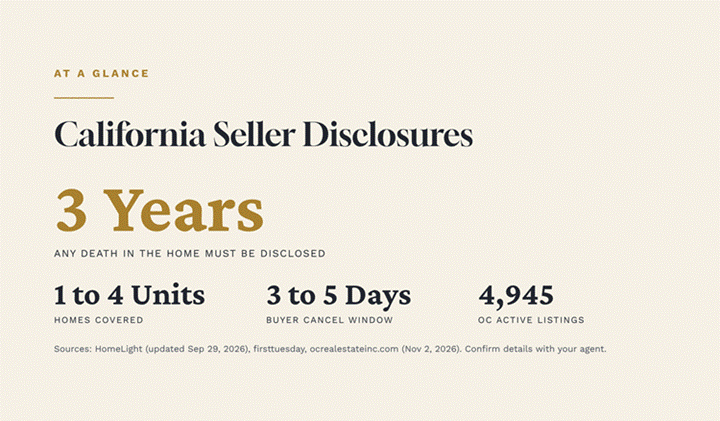
Many sellers are surprised to learn that a death in the home within the past three years must be disclosed, including a natural death. Deaths outside that window generally do not need to be disclosed, and sources note an exception for deaths from AIDS. If a buyer asks directly, be honest. The same attitude applies to repairs, past leaks, insurance claims, unpermitted work and neighborhood issues such as noise or a nearby business.
Selling As Is Does Not Mean Staying Silent
Selling a home as is means you will not make repairs. It does not remove your duty to disclose known material facts. One legal reference explains that California public policy does not allow an as is clause to waive the required disclosure. If you know about a problem, the buyer should hear it from you before they commit.
What Happens After Buyers Receive Disclosures
Buyers typically have a short window to cancel after receiving the disclosures, commonly described as three days if they are delivered in person and five days if mailed. Your contract and your agent will confirm the exact timing for your sale. If something surfaces later that you knew about and did not disclose, the buyer may seek to cancel, ask for repairs or a credit, or pursue damages after closing. That is why accurate answers matter more than short answers.
What This Means In Today's Orange County Market
According to the ocrealestateinc.com weekly report dated November 2, 2026, Orange County had 4,945 active listings, down from 5,054 a week earlier, with 1,494 homes under contract. Median days on market was 49. Homes under $2.5 million sold about 1.9% below list price, and homes over $2.5 million sold about 3.6% below. The same report counted 443 delisted homes in a week, against a typical run of about 200, which suggests some sellers are pulling back. The latest Freddie Mac survey showed the 30 year fixed rate at 7.24% on October 29, down from 7.32% the week before and up from 6.17% a year ago.
In a market where buyers have room to negotiate and rates are above 7%, trust is a real advantage. A seller who discloses early, prices honestly and has inspection reports ready gives buyers fewer reasons to ask for a large credit later.
A Simple Plan Before You List
Start by gathering repair receipts, permits, insurance claims and any past inspection reports. Fill out the disclosure forms slowly and completely, and ask your agent to review them. Consider a pre-listing inspection so you know what a buyer's inspector will find. Then price the home with those facts in mind. A home with clear paperwork and fair pricing often earns stronger offers and fewer renegotiations.
This article is general information, not legal advice. Disclosure rules have exceptions and details, so confirm the requirements for your sale with your agent and, when needed, a real estate attorney.
I'm Parisa Houshangi, 25+ years of experience serving Orange County, and proud to rank in the top 1.5% of real estate agents nationwide.
Keller Williams · OcBeautifulHomes.com · DRE# 01314175